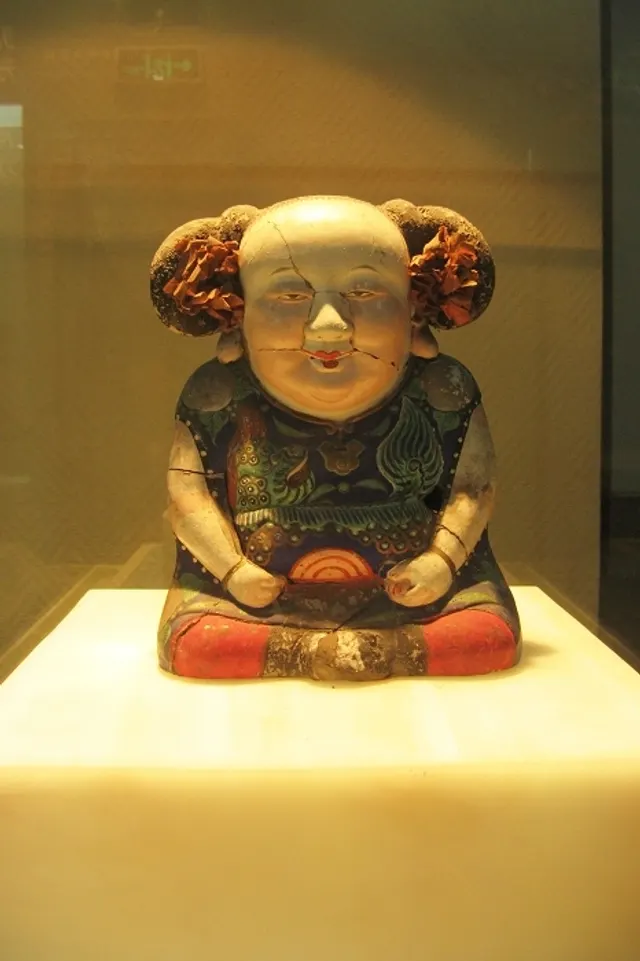
China’s figures run from solemn tomb attendants of the ancient dynasties to the joyful, brightly painted folk figurines of the market stall. The most celebrated of the latter are the Huishan clay figurines of Wuxi.
Huishan clay figurines
Made in Wuxi, Jiangsu Province, the Huishan clay figurine is a folk art more than 400 years old, beginning at the end of the Ming dynasty and flourishing under the Qing. The figures are modelled from a fine dark clay dug about a metre below ground, then painted in vivid colours. In 2006 the craft was placed on China’s first list of National Intangible Cultural Heritage.
Coarse and fine
Craftspeople divide the work into two kinds. “Coarse” figurines are bold, simple and lucky — above all the famous Da A Fu, a plump, beaming child (often made as a pair) that symbolises good fortune, joy and kindness. “Fine” figurines are delicate and expressive, drawn from opera, myth and folklore.
Opera you could hold
As Kunqu and Peking opera swept the Ming and Qing, ordinary people could not watch performances every day — so the clay masters of Huishan modelled the great opera characters in colourful figures, letting families keep a favourite hero or heroine on the shelf and enjoy the theatre’s beauty at home.
Frequently asked questions
What are Huishan clay figurines?
Huishan clay figurines are a 400-year-old folk art from Wuxi, Jiangsu, modelled from fine local clay and brightly painted. They were listed as National Intangible Cultural Heritage in 2006.
What is a Da A Fu figurine?
Da A Fu is the most famous Huishan figurine — a plump, beaming child, often made as a pair, that symbolises good fortune, joy and kindness.
Sources & further reading
Written in our own words from the references above and other reputable sources. Cultural traditions vary locally and scholarship evolves; corrections are welcome via our contact page.