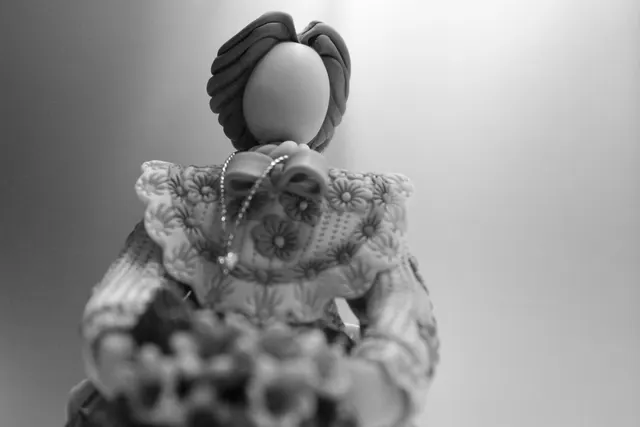
The muñeca sin rostro — the “faceless doll” — is the craft emblem of the Dominican Republic. Its blank, smooth face is not an accident but its whole meaning: a deliberate space in which every Dominican can see themselves.
A doll born in 1981
The faceless doll, also called the muñeca Limé, was created in 1981 by the potter Liliana Mera Limé in the town of Moca, in the Cibao region. Working at the wheel to capture the beauty of Dominican women in small red-clay figures, she faced two problems at once: the tiny tools to define facial features were hard to work, and — more importantly — no single face could stand for the whole nation.
Why no face
Her solution was to leave the face smooth and blank. The Dominican Republic is a blend of Taíno, African and European ancestry, and a featureless face lets the doll represent every Dominican woman without privileging any one appearance. What began as a practical choice became a powerful symbol of a shared, mixed identity.
How they look
Limé dolls are modelled from red clay and finished in bright colours, styled with ruffled dresses, flower-filled baskets, bunches of fruit and colourful hats added to the body after shaping. A porcelain-like variant is also made in the town of Higüey. Today the faceless doll is one of the most recognisable souvenirs and folk-art icons of the country.
Frequently asked questions
Why do Dominican dolls have no face?
The Dominican muñeca sin rostro is left faceless so it can represent every Dominican woman — a nation blended from Taíno, African and European ancestry that no single face could capture.
Who created the Dominican faceless doll?
The potter Liliana Mera Limé created the faceless doll in 1981 in the town of Moca, in the Cibao region; the dolls are also called muñecas Limé.
Sources & further reading
Written in our own words from the references above and other reputable sources. Cultural traditions vary locally and scholarship evolves; corrections are welcome via our contact page.