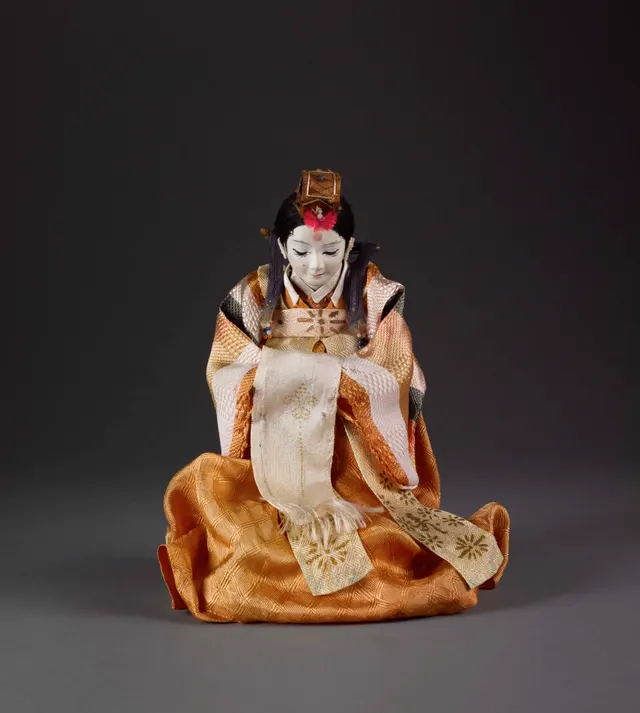
Korea’s most distinctive dolls were never toys. The kkokdu are carved wooden figures that once travelled with the dead — a tradition both tender and, at first glance, surprisingly joyful.
Kkokdu — companions for the last journey
In the nineteenth and early twentieth centuries, Korean artisans carved wooden figures called kkokdu to decorate the funeral bier (sangyeo). Attendants, entertainers, guides, guards, and real and mythical animals rode along the bier as companions, guides and protectors for the departed on the way to the next world.
Joy amid mourning
The kkokdu are strikingly cheerful — clowns, acrobats, tigers — and that gaiety is the point: it expresses a culture’s deep wish that the dead should enter the next world surrounded by joy, and its acceptance of the fleeting nature of life. Their costumes and poses are also a rare window into rural Korean village life of the time. The tradition has now almost entirely disappeared.
Hanbok dolls
A very different and more familiar Korean doll is the hanbok doll — a bride and groom (or court figures) dressed in traditional hanbok ceremonial attire. These decorative dolls were made in great numbers, especially during the post-war export boom of the 1960s–1980s, and remain a popular gift and keepsake.
Frequently asked questions
What are kkokdu?
Kkokdu are carved wooden Korean figures that once decorated the funeral bier, serving as cheerful companions, guides and protectors for the dead on the journey to the next world.
Why are kkokdu so cheerful?
Their clowns, acrobats and tigers express a wish that the dead enter the next world surrounded by joy, and an acceptance of the fleeting nature of life.
Sources & further reading
Written in our own words from the references above and other reputable sources. Cultural traditions vary locally and scholarship evolves; corrections are welcome via our contact page.