Articulated Having movable joints, so limbs (and sometimes the head) can be posed. Doll bodies have been articulated since antiquity — Greek and Roman terracotta figures used simple string-jointed limbs, while modern BJDs use elastic-strung ball joints for a far wider range of motion.
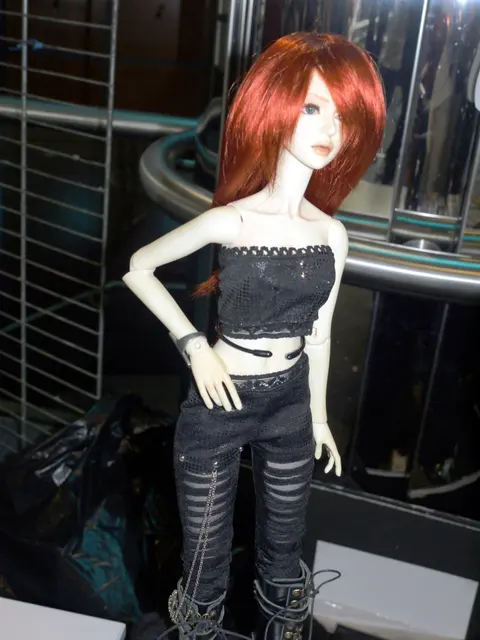
Ball-jointed doll (BJD) A doll articulated with ball-and-socket joints, usually strung together with internal elastic so every joint can move and hold a pose. The modern hobby traces to Japan’s Volks Super Dollfie, launched in 1999, which popularised cast-resin BJDs as a serious collector’s medium rather than a children’s toy.
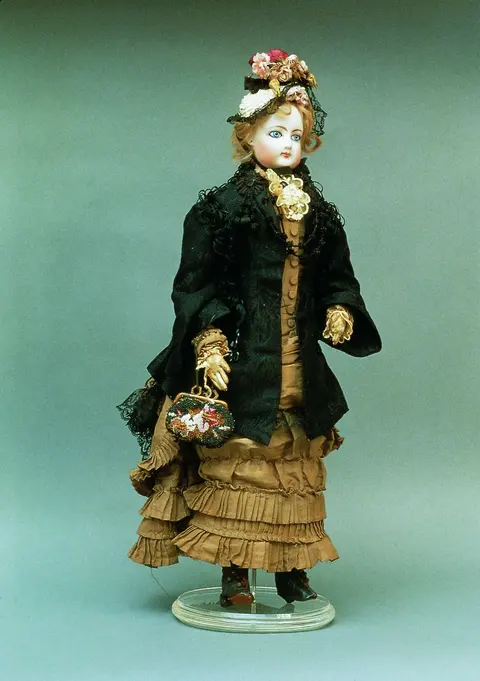
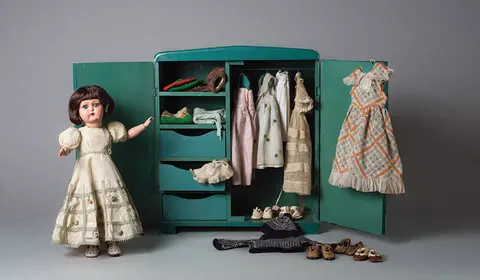
Bébé A 19th-century French doll modelled as a young child rather than a fashionable adult woman — a deliberate shift from the “lady” dolls that came before. Houses such as Jumeau and Bru led the bébé’s golden age, pairing fine bisque heads with glass eyes and elaborate wardrobes.
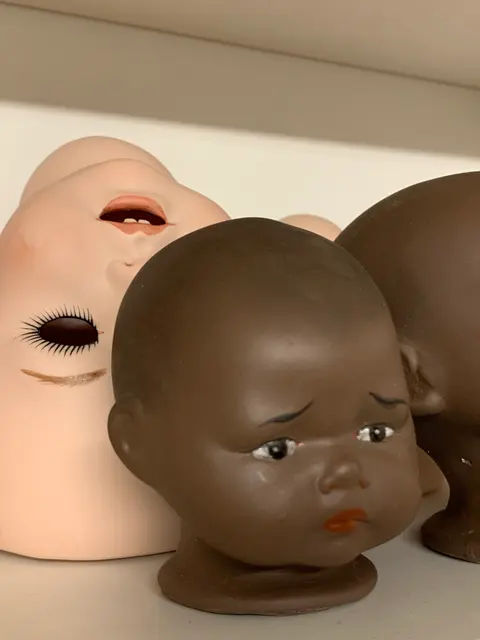
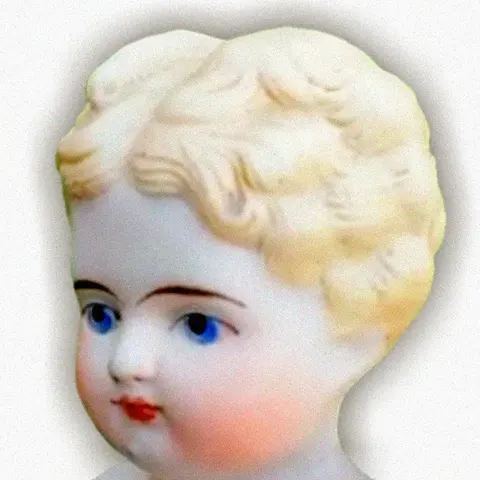
Bisque Unglazed porcelain with a matte, skin-like finish, fired above 1,260°C and left without the glossy glaze coat used on china dolls — the classic material of fine antique dolls from the 1860s onward. Its soft texture reads far more like real skin than shinier alternatives.
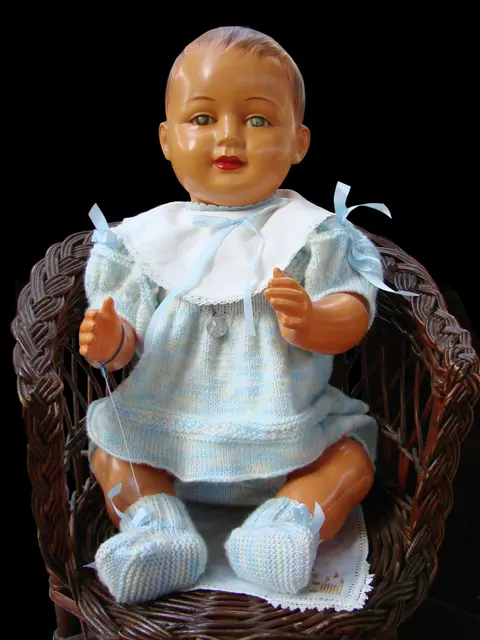
Celluloid An early plastic, made from nitrocellulose and camphor, used for lightweight dolls from roughly 1900 to the 1950s. It was cheap and easy to mould but dangerously flammable and prone to yellowing, which eventually pushed manufacturers toward safer vinyl and hard plastic.
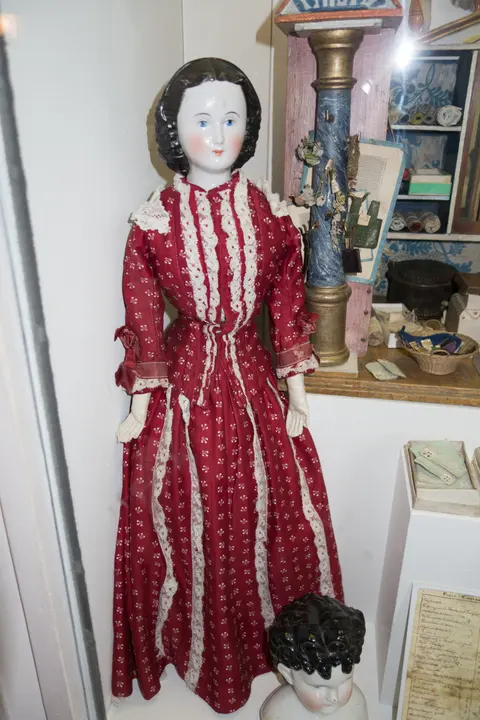
China doll A doll with a head of glazed, glossy porcelain, typically made in Germany between about 1840 and 1880. Most have moulded, painted black hair rather than a wig, and were paired with simple cloth or kid-leather bodies to keep them affordable.
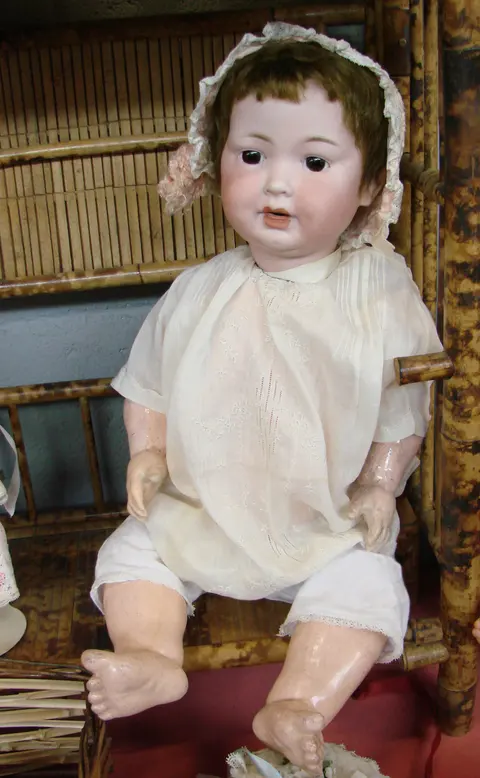
Composition A moulded mix of wood pulp, glue and fillers used for doll bodies and heads in the early 20th century, prized as a cheaper, tougher alternative to fragile bisque. Its main weakness is a fine surface cracking, or “crazing,” that develops with age and humidity.
Gofun A lustrous white coating made from powdered oyster shell bound with animal glue, layered over a paulownia-wood base to give traditional Japanese dolls their glowing, almost translucent skin. Building up dozens of thin gofun layers by hand is one of the most time-consuming steps in making a fine ningyō.
Golu (Bommai Kolu) A South Indian festival display of dolls and figurines arranged on tiered wooden steps during Navaratri, mixing gods, mythological scenes and everyday life. Families across Tamil Nadu, Karnataka and Andhra Pradesh often keep a golu collection for generations, adding a piece or two each year.
Gudiya A Hindi word for “doll,” used widely across North India. Related words appear throughout South Asian languages — putul in Bengali and Assamese, bommai in Tamil — each tied to its own regional doll-making tradition.
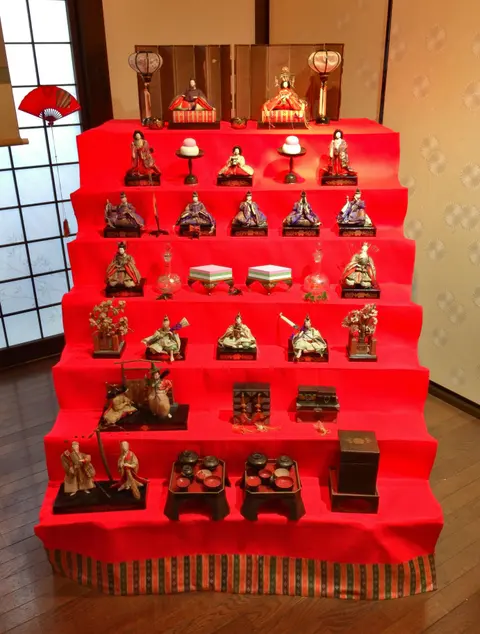
Hina ningyō The ornate, richly dressed court dolls displayed in Japan for Hinamatsuri, the girls’ festival held on 3 March. A full set can include fifteen figures across seven tiers, representing the emperor, empress and their entire court, and is often kept for a daughter’s entire childhood.
Kimekomi A Japanese technique of dressing a doll without any sewing: grooves are carved into a wooden body and the edges of patterned cloth are tucked directly into them, so the costume looks moulded to the figure. It is one of two signature Japanese doll-making secrets, alongside the gofun finishing technique.
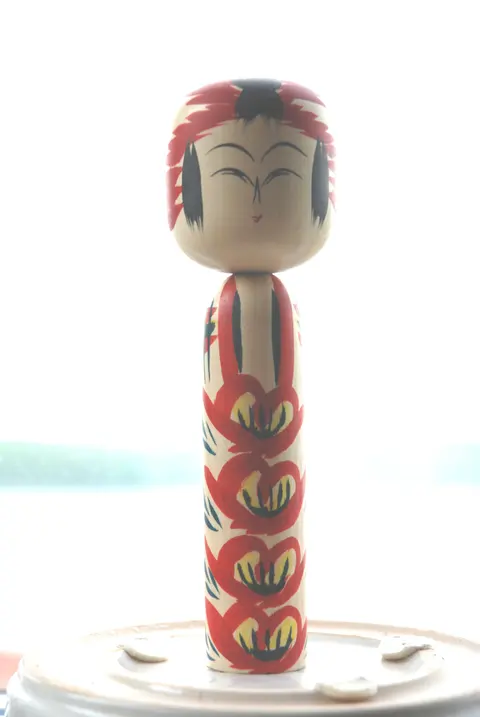
Kokeshi A limbless, turned-wood doll from northern Japan’s hot-spring region, shaped on a lathe and hand-painted with floral patterns. Each historic kokeshi-producing district — including Naruko, Tsuchiyu and Yajiro — has its own recognisable style, so collectors can often identify a kokeshi’s home town on sight.
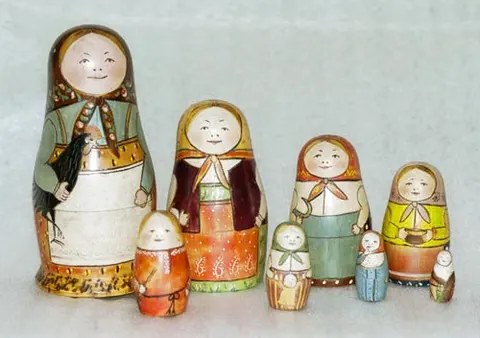
Matryoshka A Russian set of hollow wooden dolls nested one inside another, first made in the 1890s at the Abramtsevo estate near Moscow. The design was inspired by a Japanese nesting figure of the god Fukurokuju, and the name comes from “Matryona,” a traditional Russian name evoking a big, healthy family.
Ningyō The Japanese word for “doll,” literally meaning “human form.” It covers everything from Hinamatsuri court dolls to hand-carved kokeshi and gofun-finished collector’s dolls — a much broader category than the Western idea of a child’s toy.
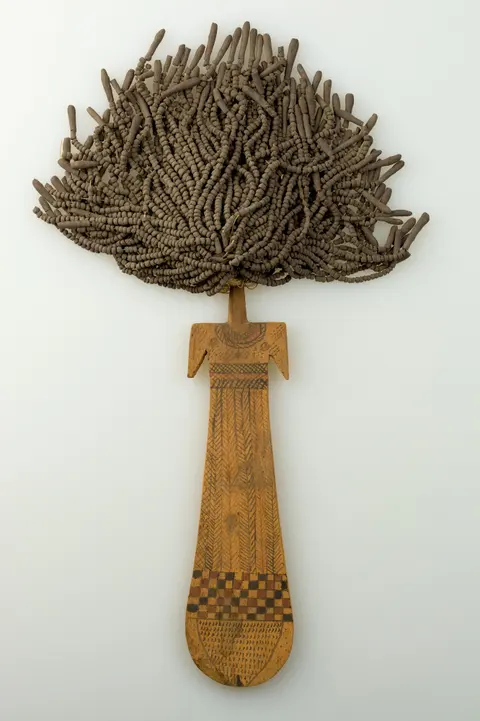
Paddle doll A flat wooden ancient-Egyptian figure with painted geometric decoration and hair made of strung clay beads, recovered from tombs dating back roughly four thousand years. Whether they served as toys, servant figures for the afterlife or fertility charms is still debated by archaeologists.
Parian Untinted white unglazed porcelain used for delicate display dolls from the 1850s to the 1880s, named for its resemblance to fine Parian marble. Parian dolls are usually more elaborately moulded than bisque, with sculpted hairstyles rather than a wig and glass eyes.
Poppet An old English word for a small doll or figure, sometimes used affectionately for a child and, in older folk belief, associated with charm or ritual figures rather than toys. The word survives today mostly in historical and folkloric usage.
Putul A Bengali and Assamese word for “doll,” and the name of this site. Bengal has its own strong doll-making traditions, including Krishnanagar’s famously lifelike clay figures.
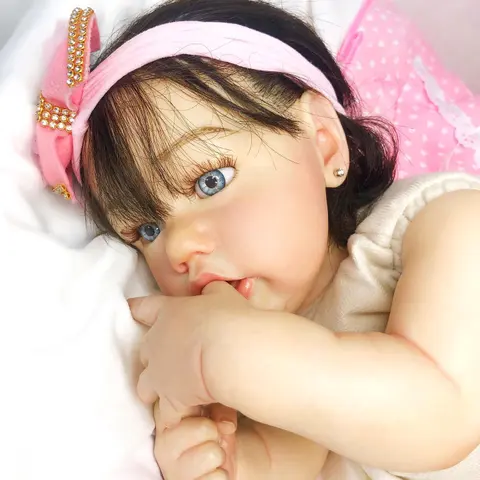
Reborn doll A vinyl doll extensively repainted, weighted and rooted by hand to resemble a real newborn baby, down to visible veining and realistic skin tone. The craft grew out of doll-restoration circles in the 1990s and is now a recognised hyper-realistic art form with its own competitions and collector market.
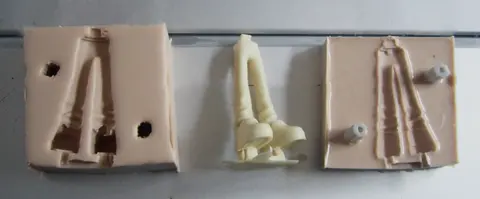
Slip Liquid clay poured into a plaster mould to cast porcelain doll parts such as heads, hands and lower limbs. As the mould absorbs water from the slip, a solid clay shell forms against its inner wall — thick enough to hold its shape once the excess liquid is poured back out.
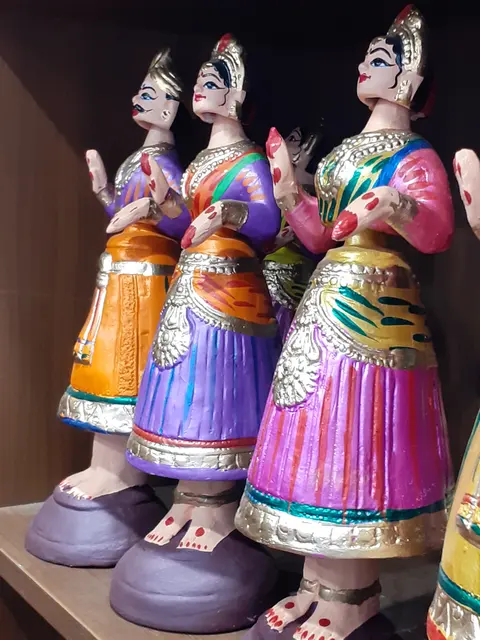
Thalaiyatti bommai The Thanjavur “head-shaking” bobble-head doll of Tamil Nadu, India, built in terracotta, clay, plaster or papier-mâché and balanced so the head and torso rock gently on their own. It is a distinctive craft tied closely to Thanjavur’s wider artisanal heritage.